
Flexible printed circuit
Optimizing component placement is a critical aspect of designing flexible printed circuits (FPCs), as it directly impacts the functionality, reliability, and manufacturability of the circuit assembly. Unlike traditional rigid printed circuit boards (PCBs), where components are typically arranged in a planar layout, FPCs offer greater flexibility in terms of design and placement due to their bendable and conformable nature. Several key factors influence the optimization of component placement in FPCs, including electrical performance, mechanical considerations, thermal management, and manufacturability.
One of the primary considerations in component placement optimization is ensuring optimal signal integrity and electrical performance. Components such as integrated circuits, resistors, capacitors, and connectors must be strategically positioned to minimize signal distortion, crosstalk, and electromagnetic interference (EMI). High-speed signal traces should be kept as short and direct as possible to minimize signal propagation delays and impedance mismatches, while sensitive analog and digital circuits should be isolated from sources of noise and interference.
Mechanical considerations also play a crucial role in optimizing component placement in flexible printed circuit, particularly in applications where the circuit is subjected to bending, flexing, or mechanical stress. Components must be positioned to accommodate the intended bending radius of the flexible substrate, ensuring that they do not experience excessive strain or deformation during operation. Additionally, components should be placed away from areas of high mechanical stress, such as bend points and connectors, to prevent damage and ensure the longevity of the FPC assembly.
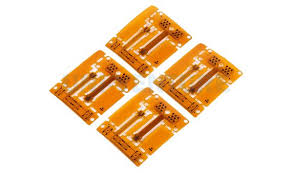
How is component placement optimized in Flexible printed circuit?
Thermal management is another important factor to consider when optimizing component placement in FPCs, especially in applications where heat dissipation is a concern. Heat-generating components, such as power devices and integrated circuits, should be strategically positioned to facilitate efficient thermal conduction and convection. Adequate spacing between components and thermal vias can help dissipate heat away from sensitive components and prevent localized hotspots that could degrade performance or reliability.
Moreover, manufacturability considerations play a crucial role in optimizing component placement in FPCs, as they impact the efficiency, yield, and cost-effectiveness of the manufacturing process. Components should be arranged in a manner that minimizes the complexity of the assembly process, facilitates automated handling and placement, and ensures compatibility with manufacturing equipment such as pick-and-place machines and reflow soldering ovens. Designing for manufacturability involves balancing the need for compactness and functionality with the practical constraints of the manufacturing process.
Furthermore, optimization of component placement in FPCs often involves iterative design refinement and simulation to evaluate different layout configurations and identify the optimal solution. Computer-aided design (CAD) tools and simulation software allow designers to analyze electrical performance, thermal behavior, and mechanical stress under various operating conditions, helping to refine the placement of components and optimize the overall layout of the FPC assembly.
In conclusion, optimizing component placement is essential for designing high-performance, reliable, and manufacturable flexible printed circuits. By considering factors such as electrical performance, mechanical considerations, thermal management, and manufacturability, designers can ensure that components are strategically positioned to meet the requirements of the application while maximizing the functionality and longevity of the FPC assembly. Through iterative design refinement and simulation, designers can achieve an optimal balance between performance, reliability, and manufacturability in FPCs for a wide range of applications and industries.

+ There are no comments
Add yours