
Role of Design in Prototype PCB Production
Prototype PCB production is a critical step in the development of cutting-edge electronics. As the bridge between engineering team requests and the realities of fabrication materials and process capabilities, prototyping ensures that a PCB’s final specifications are feasible to manufacture on a large scale.
In addition to ensuring that the prototype pcb production will fit and function within its intended final product dimensions, accurate sizing also reduces costs by minimizing design rework. Likewise, careful planning of the circuit traces and positioning of electronic components helps achieve optimal performance through the shortest signal paths. This is particularly important when working with a high-speed circuit board, where signal transmission can be disrupted by noise or other interference.
Often, human error creates flaws that are difficult to spot with standard PCB CAD software tools, known as Design Rule Checks (DRC). For example, the use of a low-density interconnect can affect circuit performance by adding unnecessary traces and length to signal pathways. While DRCs are useful for catching glaring errors, they cannot assess the impact of smaller problems or determine if they are due to a component placement problem or a design error. This is why prototype PCBs are often subjected to additional QA and testing.
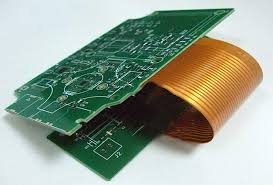
What is the Role of Design in Prototype PCB Production?
While some may think that drafting a new PCB prototype for every change to a design seems excessive and costly, it allows designers to make changes progressively. Once the design reaches a point where it is ready to move into full-spec production, any excess modification risks significant delays and price markups.
To minimize time and cost, prototypes are often fabricated using a lower-grade material than that used for the full-spec production run. This may include FR-4 laminates and less expensive copper types like rolled, as well as simplified processing techniques for faster turnaround. Prototype manufacturers may also focus on reducing the number of drilled holes to reduce the overall machining costs.
The last key element of design in prototype PCB production is ensuring that all parts and connections are properly positioned. Incorrect positioning can lead to solder bridges, overlapping pins, and shorted connections, all of which can adversely affect the operation of a circuit. This is why close inspection of prototypes with a magnifying glass or microscope is required to detect these flaws.
Prototype PCBs also serve as visual aids to help designers communicate their ideas with clients more easily. By presenting them with an actual physical example, designers can provide clearer explanations and eliminate the confusion, questions, and client-requested redesigns that can slow down the project timeline. Additionally, by incorporating prototype testing into the design process, designers can identify and rectify any mistakes before a costly mistake is made in the production process. As a result, prototypes can shorten the project development time significantly.

+ There are no comments
Add yours